Research
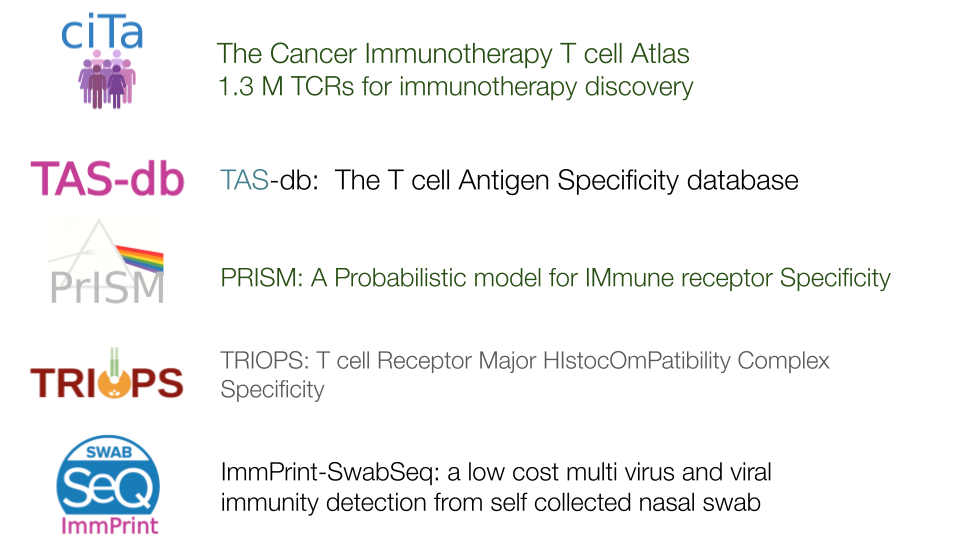
Novel data resources and AI tools to accelerate the discovery of novel cancer immunotherapies. Single-cell atlasses describing the tumor immune microenvironment have been previously reported and have yielded deep insights into T-cell biology in cancers. Despite these advancements, the specificity of T cell responses to pathogens in individuals with cancer, has been minimally explored. To address this gap we developed two data resources the T cell antigen specificity database (TAS-db) and the Cancer Immunotherapy T cell Atlas (CITA), and PRISM, a deep learning model to predict antigen specificity from T cell receptor sequences. The TAS-db integrates experimentally validated T cell receptor (TCR) and antigen specificity data, from six public databases, and individual studies, to establish a harmonized data resource of T cell antigen specificity. The CITA is a pan-cancer, single-cell multi omic annotated data resource, with transcriptomes from 1.5M T cells, with over 1.2M T cells with matched TCR and antigen data from from 265 donors, 30 distinct cancer types, 19 tissue types, 7 lesion categories, and 4 distinct sequencing platforms. The PRISM method (Probabilistic Inference of Specificity in Immune Receptors), is a state of the art deep learning model and probabilistic framework for inferring T cell receptor antigen specificity. The TRIOPS method us a deep learning model to predict T cell receptor HLA specificity.